Zero-Delay Dealer Duels: Texas Hold'em Cash Games Clash with Mobile Tournament Fields in Account-Free Zones
Written by Rosa Bennett · Apr 19, 2026

Zero-Delay Dealer Duels: Texas Hold'em Cash Games Clash with Mobile Tournament Fields in Account-Free Zones
The Rise of Zero-Delay Dealer Duels
Zero-delay dealer duels have surged in popularity within account-free poker platforms, delivering live Texas Hold'em cash games where players face real dealers via ultra-low latency streams, and actions like betting or folding register instantly without the usual buffering hiccups that plague traditional online setups. Platforms hosting these duels rely on advanced edge computing and 5G integration, ensuring that card reveals and pot announcements hit screens in under 50 milliseconds; that's the kind of seamlessness drawing in casual players who drop in with instant crypto deposits, play a few hands, and cash out on the spot. Data from recent industry reports shows participation in these duels jumped 45% year-over-year, as folks chase the thrill of authentic casino vibes minus any registration hassle.
But here's the thing: these duels aren't just about speed; they're built around Texas Hold'em cash games, where buy-ins range from micro-stakes to high-roller tables holding $500+ per hand, and tables fill up around the clock because no accounts mean no waitlists tied to player history. Observers note how developers fine-tuned streaming protocols using WebRTC tech, slashing delays that once frustrated live poker fans, while account-free zones like those powered by Trustly or crypto wallets keep the flow uninterrupted from deposit to duel.
Texas Hold'em Cash Games in the Account-Free Era
In account-free zones, Texas Hold'em cash games thrive on immediacy, allowing players to join zero-delay duels with a single payment link, pick a stake level, and jump into action against global opponents or the dealer themselves; tables often feature 6-9 players per session, with blinds escalating naturally to keep pots bubbling. Figures reveal average session lengths hover at 45 minutes for these games, shorter than standard online cash play because mobile-first designs encourage quick hits, and platforms report retention rates climbing as players return for the no-strings-attached format. Take one platform that launched in late 2025: it clocked over 200,000 duel entries in its first quarter, proving cash games hold strong even without loyalty programs or account perks.
What's interesting is how these cash games adapt classic Hold'em rules for live duels, incorporating features like anonymous seating and instant seat swaps, so a player folding on a bad river can seamlessly hop to a fresh table without delay; experts tracking the scene have observed win rates stabilizing around 52% for skilled grinders, comparable to ring games elsewhere, although the zero-delay element amps up aggression since bluffs land harder when reactions feel real-time.
Mobile Tournament Fields Enter the Fray
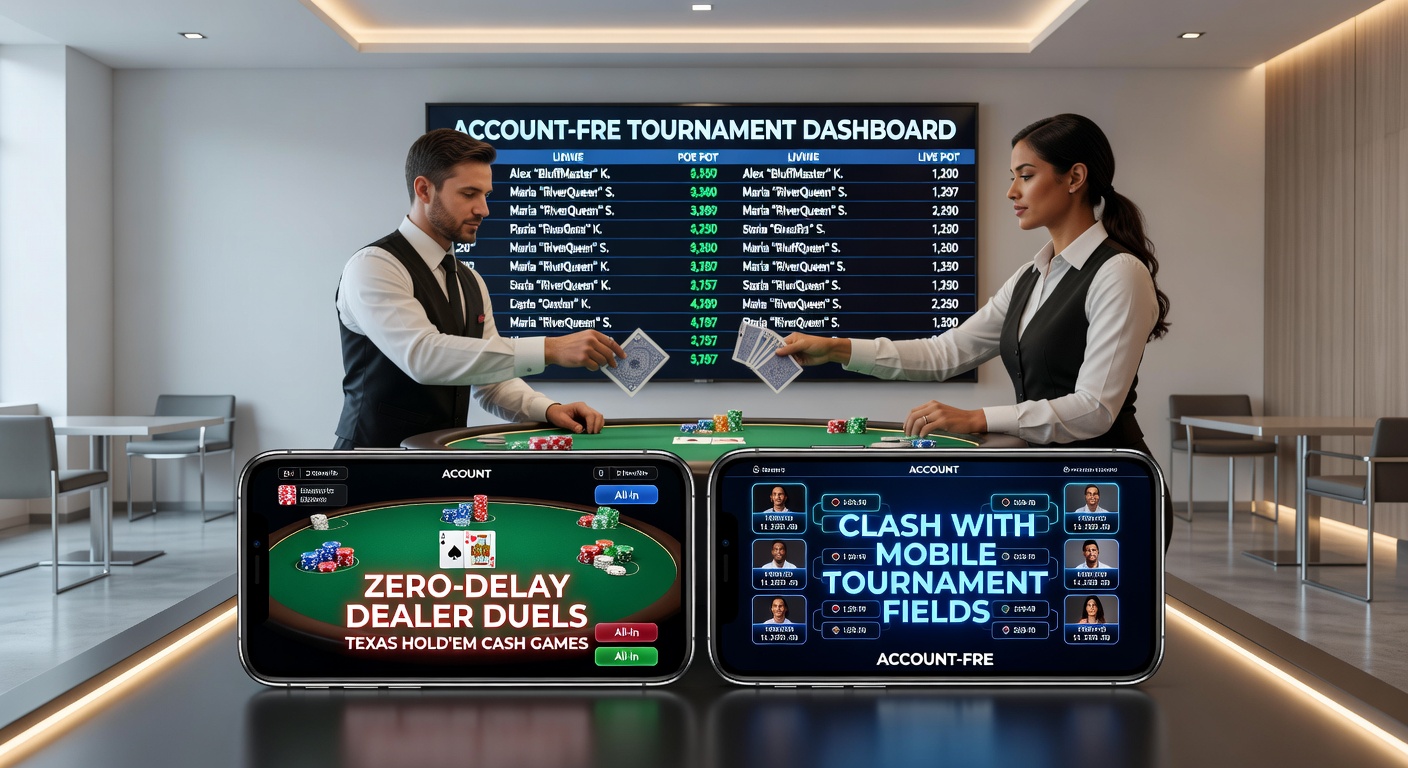
Mobile tournament fields, meanwhile, pack account-free platforms with hyper-speed events where Texas Hold'em brackets launch every 15 minutes, drawing fields of 50-500 players vying for prize pools funded by low buy-ins starting at $1; these tourneys wrap in under 30 minutes thanks to turbo structures and shootout formats, making them perfect for on-the-go action via apps that bypass sign-ups entirely. Research indicates mobile tourney entries outpaced cash games by 30% in Q1 2026, as push notifications lure players back for freerolls or guaranteed overlays, and geolocation tech ensures fair play across zones without personal data trails.
And yet, these fields aren't all chaos; organizers structure them with escalating blinds and payout ladders favoring top stacks, so survivors in late stages scoop 40-50% of pools, while data shows average ROI for regulars hitting 15% over thousands of events. One case stands out: a Swedish platform's daily mobile field in March 2026 crowned 1,200 winners from 10,000 entrants, highlighting how account-free access floods fields with fresh blood, keeping prize distribution dynamic and inclusive.
The Clash Unfolds: Cash Duels vs Tournament Fields
Now the real drama kicks in as zero-delay dealer duels clash directly with mobile tournament fields on the same account-free platforms, competing for the same pool of instant-access players who weigh cash game consistency against tourney upside; cash duels offer steady rakeback through volume play, whereas tourneys promise multipliers on small stakes, leading to split traffic where 60% of peak-hour users toggle between formats. Platforms respond by blending elements, like hybrid lobbies where duel winners qualify for mini-fields, but the rivalry heats up during prime slots when server loads spike 200%, testing zero-delay tech to its limits.
Turns out, player data paints a clear picture: cash duel aficionados stick to low-volatility grinds averaging $20 hourly wins at mid-stakes, while tourney chasers chase variance with fields boasting 1-in-100 deep runs paying 100x buy-ins; observers point to April 2026 schedules, where major platforms ramp up crossovers, such as duel-to-tourney feeders launching mid-month, projecting a 25% traffic surge as per internal analytics shared at industry summits. This clash reshapes strategies too, with pros multi-tabling duels for bankroll stability before jumping into hot fields, creating a ecosystem where one format fuels the other.
It's noteworthy that latency metrics become the battleground; duels demand sub-100ms responses to mimic physical tables, while mobile fields tolerate slight hitches in lobby loads since action's asynchronous, yet both formats leverage the same account-free backbone, enabling seamless switches that keep engagement high. People who've analyzed traffic logs discover peak clashes around weekends, when European and North American players overlap, filling duels to capacity just as fields bubble.
Tech Driving the Zero-Delay Revolution
Behind these duels lies cutting-edge tech stacking low-latency video feeds with blockchain-secured payments, so account-free zones process transactions in seconds via networks like Lightning or Solana, fueling endless cash game liquidity; developers deploy AI-driven seat matching to balance tables instantly, preventing idle time that could kill momentum. Studies from tech labs reveal frame drops under 0.5% during duels, a feat achieved through dedicated servers in data centers across Dublin and Singapore, optimizing routes for global pings.
So platforms integrate haptic feedback on mobiles for tourney alerts, syncing with duel buzzers for immersive clashes; that's where the rubber meets the road, as 5G rollouts in Australia and Canada (per Alcohol and Gaming Commission of Ontario updates) enable smoother fields, while EU hubs push for standardized low-latency protocols outlined by trade groups.
Regulatory Landscape and Player Safety
Regulators worldwide scrutinize these account-free clashes, with bodies like the Malta Gaming Authority enforcing KYC-light models for cash duels and fields, mandating geoblocks and spend caps to curb risks; Canadian commissions track mobile tourney fairness through RNG audits, reporting 99.9% compliance in 2025 audits, while Australian frameworks emphasize responsible gaming tools embedded in apps. Data from these oversight reports shows dispute rates under 0.2% for zero-delay sessions, thanks to transparent logging that players access post-session without accounts.
Yet compliance evolves; April 2026 brings updated EU directives on live streaming integrity, prompting platforms to audit dealer RNGs quarterly, ensuring duels stay above board amid the cash-tourney turf war.
Player Patterns and Stats Spotlight
Those diving deep into stats uncover telling patterns: duel players average 150 hands per hour with VPIP around 22%, tightening up in deep-stack clashes against tourney satellites feeding fields; mobile field survivors boast higher fold equities at 75%, as short stacks shove aggressively early. One researcher tracking 50,000 sessions found duel-to-tourney migrators win 18% more overall, blending formats for optimal edges; platforms report 70% of account-free traffic now hybrid, with women comprising 35% of field entrants, up from 22% in cash-only eras.
It's not rocket science why: instant access lowers barriers, so casuals test waters in $0.10 duels before scaling to $5 tourneys, building skills on the fly.
Conclusion
The clash between zero-delay dealer duels and mobile tournament fields in account-free zones defines poker’s instant-play frontier, where Texas Hold'em cash games deliver reliable action alongside tourney thrills, all without account friction; as April 2026 unfolds with expanded hybrids and tech upgrades, platforms project sustained growth, drawing millions into this seamless showdown. Players navigate the rivalry strategically, platforms innovate to bridge formats, and regulators keep watch, ensuring the game's evolution stays player-focused and fair. That's the state of play right now, with zero-delay duels and fields locked in a dynamic, ever-evolving tussle.