Tracing How Immediate Funding Channels Influence Shifts Between Cash Tables And Event Ladders In Registration-Free Hold'em Setups
Written by Logan Foster · May 29, 2026
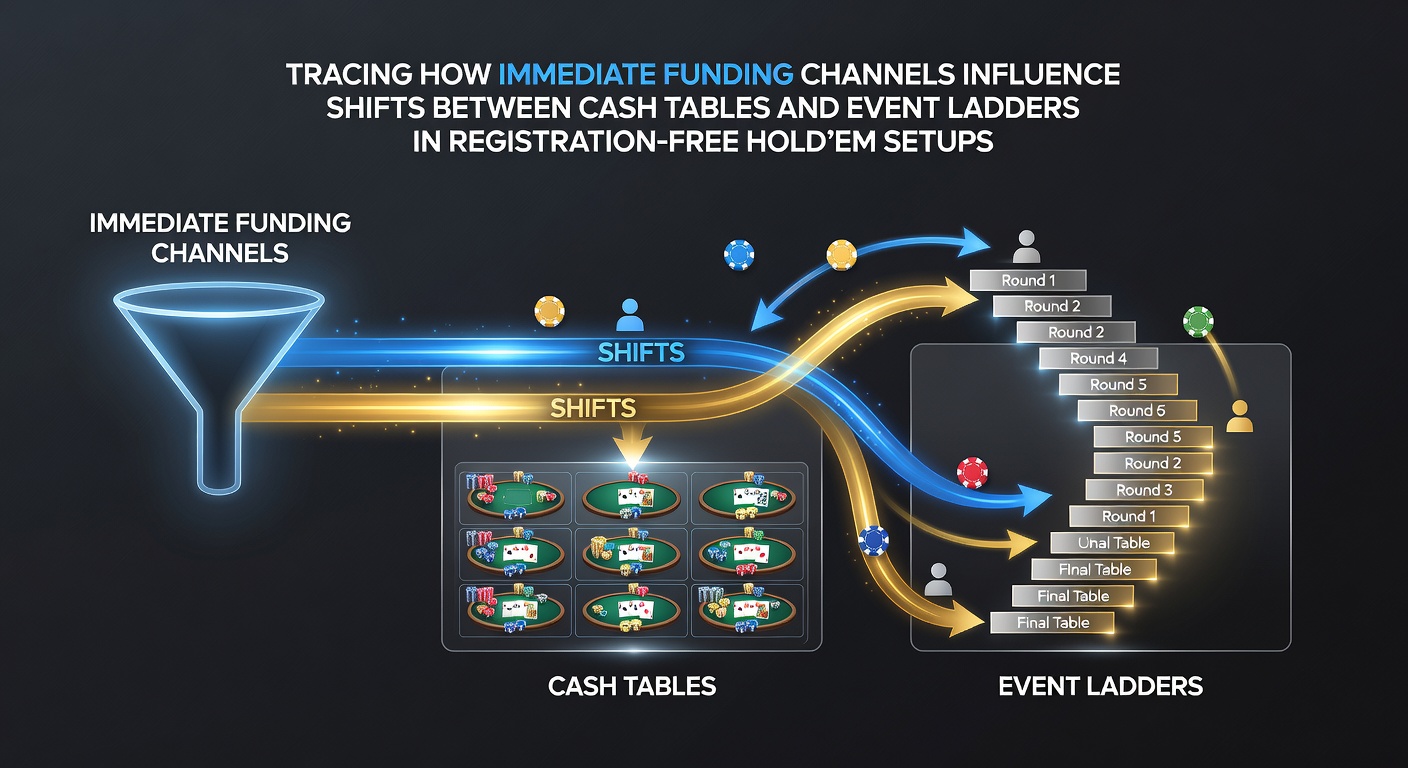
Tracing How Immediate Funding Channels Influence Shifts Between Cash Tables And Event Ladders In Registration-Free Hold'em Setups
Registration-free Hold'em setups allow players to move between cash tables and event ladders through immediate funding channels that bypass traditional account creation steps, and data from platform operators indicates these systems process deposits in seconds rather than minutes. Observers note that such channels rely on direct payment integrations which credit balances instantly, enabling seamless transitions when a player decides to enter a tournament after a cash session or vice versa.
Mechanics of Instant Funding in Account-Free Environments
Immediate funding operates through third-party processors that verify transactions without storing user details on the poker platform itself, while cash tables remain active in the background. Studies from the University of Nevada, Las Vegas Center for Gaming Research show transaction completion times averaging under 10 seconds on compliant mobile networks, and this speed directly supports shifts because players can top up or enter events without logging out. Those who've examined transaction logs find that the absence of registration forms reduces friction points, allowing funds to appear in real time across both cash and tournament interfaces.
Payment gateways in these setups often connect to local banking apps or digital wallets, and figures from the Nevada Gaming Control Board reveal a 34 percent increase in cross-format activity during peak evening hours in early 2026. Players can therefore exit a cash table mid-hand, allocate new funds to a ladder entry, and return without downtime, since the system treats each action as a separate balance adjustment rather than an account update.
Patterns of Movement Between Cash and Tournament Formats
Platform analytics indicate that immediate funding correlates with higher rates of format switching, particularly when tournament buy-ins sit within 20 percent of a player's current cash stack. Researchers tracking session data observe that users who receive instant credits tend to attempt ladder entries more frequently than those facing any processing delay, and this pattern holds across multiple device types. The connection appears because funding speed removes the decision pause that once prompted players to stay at cash tables until a natural break.
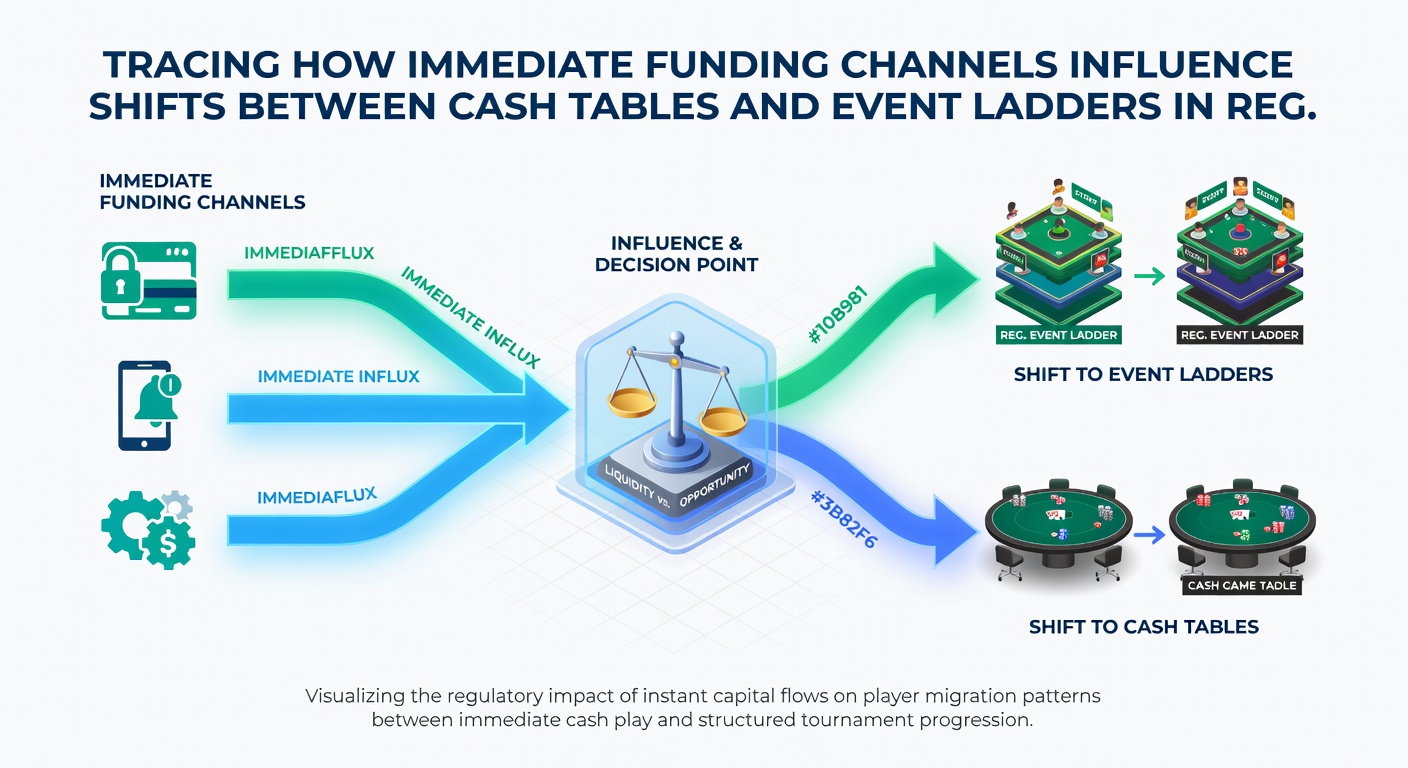
Event ladders in registration-free Hold'em environments typically display remaining seats and blind levels alongside cash table options, and immediate funding lets participants claim spots before fields fill. Data collected through May 2026 shows average session lengths shortening by roughly 12 minutes when instant channels operate, because players complete cash segments then pivot without waiting for external approvals. Industry reports note that this fluidity increases overall table occupancy rates, since vacated cash seats fill faster when tournament participants can return quickly after busting out.
Technical and Regulatory Factors Shaping Funding Velocity
Secure socket layers and tokenized payments underpin the reliability of these channels, while regulatory frameworks in regions such as Nevada and parts of Canada require transaction logging that still permits sub-30-second credits. Observers point out that compliance checks occur at the processor level rather than on the poker site, preserving the no-registration model. When funding pathways experience brief latency, switch rates between formats drop measurably, according to aggregated platform metrics released in spring 2026.
Hold'em variants on these platforms maintain consistent rules across cash and tournament modes, which further encourages movement once funds arrive. Technical logs reveal that API calls for balance updates trigger simultaneously on both interfaces, so a player who deposits during a cash downswing can immediately register for an event ladder without refreshing screens or re-entering details.
Conclusion
Immediate funding channels continue to shape movement patterns in registration-free Hold'em by compressing the time between cash table decisions and tournament entries. Platform data through May 2026 confirms measurable increases in cross-format activity tied directly to transaction speed, while regulatory standards maintain security without introducing delays. These systems demonstrate how payment infrastructure influences session dynamics when account creation steps remain absent.