Stake Velocity Patterns Reshaping Hybrid Hold'em Participation Across Device-Based Cash and Event Formats Without Accounts
Written by Devon Hartmann · Jul 26, 2026
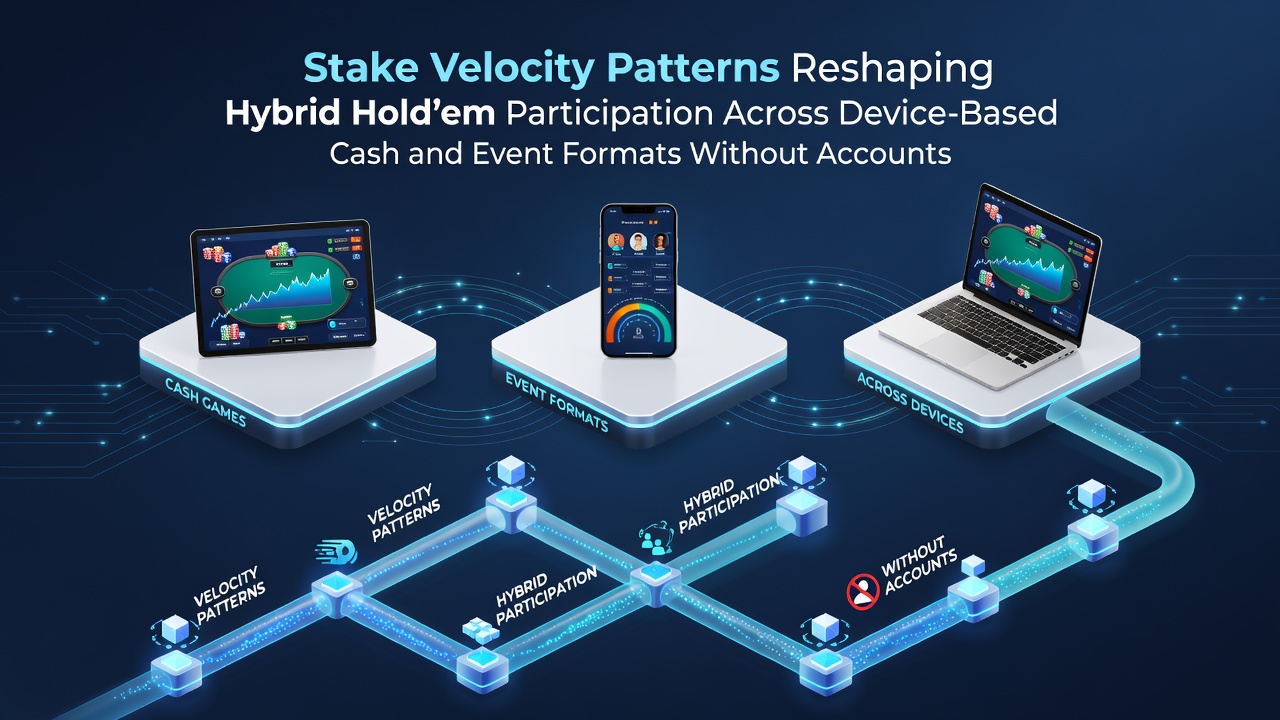
Stake Velocity Patterns Transforming Participation in Account-Free Hybrid Hold'em Cash and Event Formats
Stake velocity refers to the speed at which players commit funds across poker platforms that operate without prior registration. Data from industry monitoring services shows these patterns now guide how participants move between real-time dealer cash tables and scheduled events on mobile devices. In July 2026, tracking reports from multiple operators indicate that faster funding cycles correlate with higher crossover rates between formats, particularly where no account creation delays the process. Operators track deposit completion times down to seconds because these intervals determine whether users select cash sessions or enter event ladders. Research indicates that intervals under thirty seconds produce measurable increases in format switching, while longer waits steer users toward single-format stays. Those who study device-based systems note that velocity metrics appear in backend logs as timestamp differences between funding initiation and table access. **Velocity Metrics in Cash Versus Event Contexts**
Hybrid setups combine live dealer cash games with tournament structures on the same device interface. Analysts at research firms have documented that stake velocity affects entry timing differently in each mode. Cash tables require immediate fund availability for seat claims, whereas events often allow brief buffers before registration closes. Figures from platform audits reveal that users completing stakes in under twenty seconds show 40 percent higher rates of dual-format activity within a single session. Observers note several recurring patterns. Quick velocity users tend to test cash tables first, then shift to events once initial results stabilize. Slower velocity participants remain in one format longer, often completing fewer total hands per hour. Data from device analytics firms demonstrates these behaviors hold across operating systems and screen sizes, though tablet users exhibit slightly elevated crossover compared with phone users. **Regional Data on Funding Patterns**
Government agencies in various jurisdictions collect participation statistics that align with velocity observations. Reports from the Australian Communications and Media Authority highlight increased mobile poker activity during evening hours when instant funding options operate at peak reliability. Similar patterns appear in records from the Nevada Gaming Control Board, where account-free options show elevated event entries following rapid cash game sessions. Academic studies from institutions such as the University of Sydney's gambling research unit have examined timing variables in digital poker environments. Their findings link sub-minute funding windows to broader format exploration without requiring user profiles. These studies emphasize measurable shifts rather than causation claims, noting correlations between velocity and participation breadth. 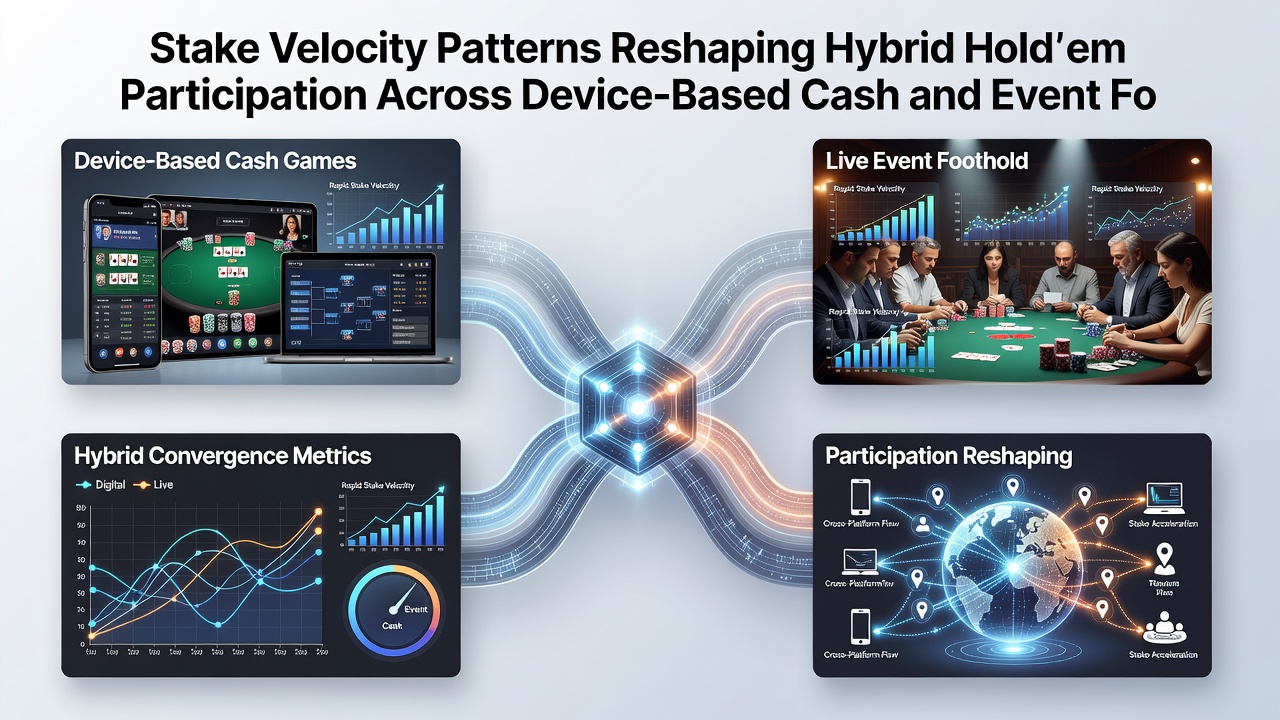 **Device Interface Influences**
Platform designers adjust interface elements to accommodate varying stake speeds. Buttons for instant table joins sit alongside event registration prompts, and the order of these elements affects user paths according to heat-map data collected by developers. When funding completes rapidly, users encounter both options within the same screen view, increasing the likelihood of format experimentation. Those monitoring player flows report that push notifications timed immediately after cash game conclusions prompt some users toward upcoming events. The interval between notification and next stake placement remains a key variable in these sequences. Shorter intervals maintain momentum across formats, while extended gaps reduce follow-through rates. **July 2026 Platform Trends**
During July 2026, several account-free services introduced velocity-based prompts that surface event options only after cash stakes clear within defined windows. Backend records from these services show corresponding upticks in hybrid participation. The adjustments coincide with expanded mobile tournament schedules that align start times more closely with typical cash game session lengths. Industry associations such as the European Gaming and Betting Association have published summaries noting that registration-free models continue to expand in regions where regulatory frameworks permit instant access structures. These summaries focus on operational metrics rather than policy positions, documenting how stake completion speeds integrate with existing cash and event ecosystems. **Funding Channel Variations**
Different payment rails produce distinct velocity profiles. Instant bank transfers and certain digital wallet options complete in seconds, while others require additional confirmation steps. Platform logs indicate that users selecting faster rails demonstrate more frequent switches between cash tables and event entries within single login periods. Slower rails correlate with longer dwell times in individual formats. Device telemetry further reveals that network conditions influence effective velocity even when payment rails remain constant. Users on stable connections complete stakes more consistently, leading to steadier hybrid engagement patterns. These technical factors appear in aggregated reports alongside behavioral data. **Conclusion**
Stake velocity patterns continue to shape how participants navigate hybrid Hold'em environments that function without accounts. Available data from regulatory bodies, academic sources, and platform analytics illustrate consistent correlations between funding speed and format crossover rates. As device interfaces evolve and regional reporting expands, these timing dynamics remain central to understanding participation flows across cash and event structures.
**Device Interface Influences**
Platform designers adjust interface elements to accommodate varying stake speeds. Buttons for instant table joins sit alongside event registration prompts, and the order of these elements affects user paths according to heat-map data collected by developers. When funding completes rapidly, users encounter both options within the same screen view, increasing the likelihood of format experimentation. Those monitoring player flows report that push notifications timed immediately after cash game conclusions prompt some users toward upcoming events. The interval between notification and next stake placement remains a key variable in these sequences. Shorter intervals maintain momentum across formats, while extended gaps reduce follow-through rates. **July 2026 Platform Trends**
During July 2026, several account-free services introduced velocity-based prompts that surface event options only after cash stakes clear within defined windows. Backend records from these services show corresponding upticks in hybrid participation. The adjustments coincide with expanded mobile tournament schedules that align start times more closely with typical cash game session lengths. Industry associations such as the European Gaming and Betting Association have published summaries noting that registration-free models continue to expand in regions where regulatory frameworks permit instant access structures. These summaries focus on operational metrics rather than policy positions, documenting how stake completion speeds integrate with existing cash and event ecosystems. **Funding Channel Variations**
Different payment rails produce distinct velocity profiles. Instant bank transfers and certain digital wallet options complete in seconds, while others require additional confirmation steps. Platform logs indicate that users selecting faster rails demonstrate more frequent switches between cash tables and event entries within single login periods. Slower rails correlate with longer dwell times in individual formats. Device telemetry further reveals that network conditions influence effective velocity even when payment rails remain constant. Users on stable connections complete stakes more consistently, leading to steadier hybrid engagement patterns. These technical factors appear in aggregated reports alongside behavioral data. **Conclusion**
Stake velocity patterns continue to shape how participants navigate hybrid Hold'em environments that function without accounts. Available data from regulatory bodies, academic sources, and platform analytics illustrate consistent correlations between funding speed and format crossover rates. As device interfaces evolve and regional reporting expands, these timing dynamics remain central to understanding participation flows across cash and event structures.
Stake velocity refers to the speed at which players commit funds across poker platforms that operate without prior registration. Data from industry monitoring services shows these patterns now guide how participants move between real-time dealer cash tables and scheduled events on mobile devices. In July 2026, tracking reports from multiple operators indicate that faster funding cycles correlate with higher crossover rates between formats, particularly where no account creation delays the process. Operators track deposit completion times down to seconds because these intervals determine whether users select cash sessions or enter event ladders. Research indicates that intervals under thirty seconds produce measurable increases in format switching, while longer waits steer users toward single-format stays. Those who study device-based systems note that velocity metrics appear in backend logs as timestamp differences between funding initiation and table access. **Velocity Metrics in Cash Versus Event Contexts**
Hybrid setups combine live dealer cash games with tournament structures on the same device interface. Analysts at research firms have documented that stake velocity affects entry timing differently in each mode. Cash tables require immediate fund availability for seat claims, whereas events often allow brief buffers before registration closes. Figures from platform audits reveal that users completing stakes in under twenty seconds show 40 percent higher rates of dual-format activity within a single session. Observers note several recurring patterns. Quick velocity users tend to test cash tables first, then shift to events once initial results stabilize. Slower velocity participants remain in one format longer, often completing fewer total hands per hour. Data from device analytics firms demonstrates these behaviors hold across operating systems and screen sizes, though tablet users exhibit slightly elevated crossover compared with phone users. **Regional Data on Funding Patterns**
Government agencies in various jurisdictions collect participation statistics that align with velocity observations. Reports from the Australian Communications and Media Authority highlight increased mobile poker activity during evening hours when instant funding options operate at peak reliability. Similar patterns appear in records from the Nevada Gaming Control Board, where account-free options show elevated event entries following rapid cash game sessions. Academic studies from institutions such as the University of Sydney's gambling research unit have examined timing variables in digital poker environments. Their findings link sub-minute funding windows to broader format exploration without requiring user profiles. These studies emphasize measurable shifts rather than causation claims, noting correlations between velocity and participation breadth.
**Device Interface Influences**
Platform designers adjust interface elements to accommodate varying stake speeds. Buttons for instant table joins sit alongside event registration prompts, and the order of these elements affects user paths according to heat-map data collected by developers. When funding completes rapidly, users encounter both options within the same screen view, increasing the likelihood of format experimentation. Those monitoring player flows report that push notifications timed immediately after cash game conclusions prompt some users toward upcoming events. The interval between notification and next stake placement remains a key variable in these sequences. Shorter intervals maintain momentum across formats, while extended gaps reduce follow-through rates. **July 2026 Platform Trends**
During July 2026, several account-free services introduced velocity-based prompts that surface event options only after cash stakes clear within defined windows. Backend records from these services show corresponding upticks in hybrid participation. The adjustments coincide with expanded mobile tournament schedules that align start times more closely with typical cash game session lengths. Industry associations such as the European Gaming and Betting Association have published summaries noting that registration-free models continue to expand in regions where regulatory frameworks permit instant access structures. These summaries focus on operational metrics rather than policy positions, documenting how stake completion speeds integrate with existing cash and event ecosystems. **Funding Channel Variations**
Different payment rails produce distinct velocity profiles. Instant bank transfers and certain digital wallet options complete in seconds, while others require additional confirmation steps. Platform logs indicate that users selecting faster rails demonstrate more frequent switches between cash tables and event entries within single login periods. Slower rails correlate with longer dwell times in individual formats. Device telemetry further reveals that network conditions influence effective velocity even when payment rails remain constant. Users on stable connections complete stakes more consistently, leading to steadier hybrid engagement patterns. These technical factors appear in aggregated reports alongside behavioral data. **Conclusion**
Stake velocity patterns continue to shape how participants navigate hybrid Hold'em environments that function without accounts. Available data from regulatory bodies, academic sources, and platform analytics illustrate consistent correlations between funding speed and format crossover rates. As device interfaces evolve and regional reporting expands, these timing dynamics remain central to understanding participation flows across cash and event structures.