Participant Profiles Across Frictionless Poker Platforms Enabling Fluid Shifts Between Cash Games and Tournaments
Written by Devon Hartmann · Jun 28, 2026
Participant Profiles Across Frictionless Poker Platforms Enabling Fluid Shifts Between Cash Games and Tournaments
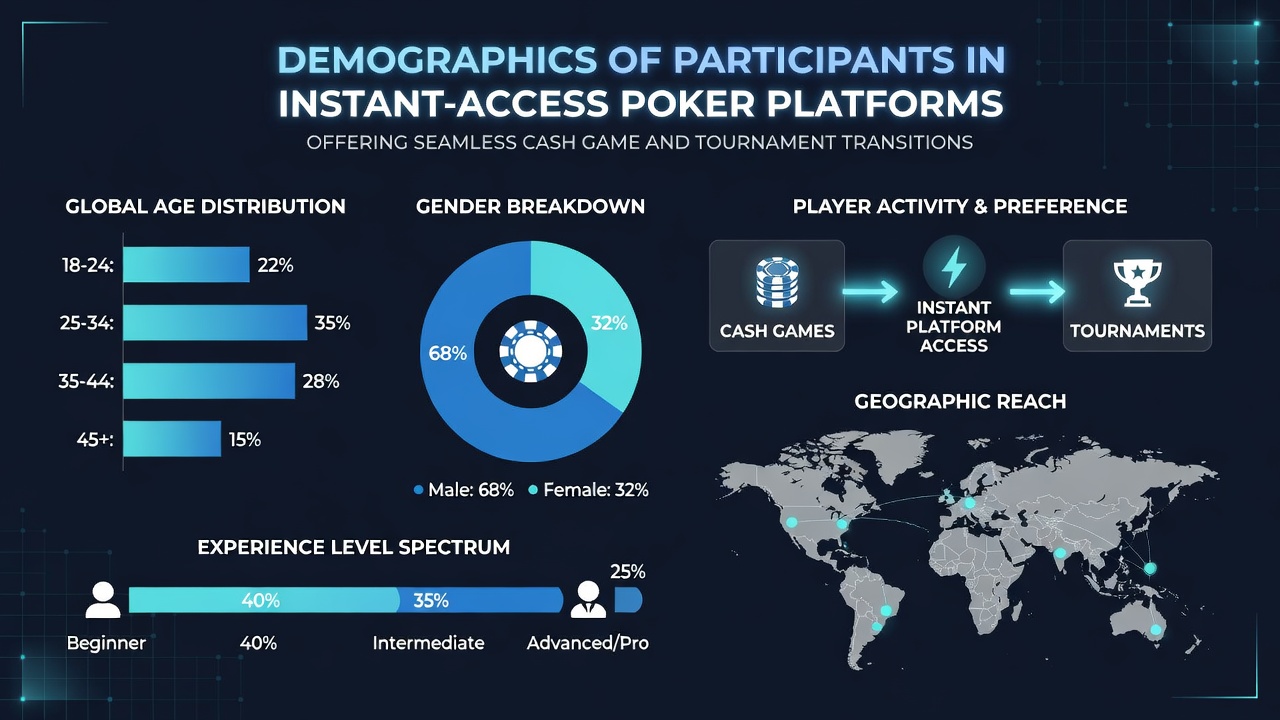
Instant-access poker platforms have drawn attention from industry analysts who track how registration-free models influence who participates in cash games that transition directly into tournament structures, and data collected through June 2026 shows distinct patterns in user composition across these environments. Researchers at academic institutions monitoring digital gaming behavior note that participants tend to cluster in specific age brackets, with the 25-to-34 group forming the largest segment according to aggregated platform metrics released that month.
Geographic distribution reveals heavy concentration in regions where regulatory frameworks permit rapid funding without traditional account creation, and observers point to North American and European markets as primary drivers while smaller but growing clusters appear in parts of Asia and Australia. Those studying player migration between formats find that seamless transitions encourage repeat engagement from individuals who value both the steady pace of cash tables and the structured progression of tournaments, leading to demographic profiles that differ from conventional registered sites.
Age and Experience Levels
Platform analytics indicate the core user base falls between 25 and 44 years old, with many participants reporting prior experience in both live and online formats before adopting instant-access options, and this age range aligns with broader trends documented in gaming association reports from multiple jurisdictions. Younger cohorts under 25 appear in smaller numbers yet show higher rates of format switching, often moving between cash sessions and short-stack tournaments within single sessions, while older groups above 45 demonstrate steadier retention once they establish preferred entry points.
Experience levels vary widely yet follow observable trends where mid-level players dominate, and studies from research bodies in Canada highlight that users with two to five years of online play history adapt most readily to the zero-delay environment. Newer entrants frequently start with lower-stakes cash games before exploring tournament ladders, creating a pipeline that platforms track through funding patterns and session duration data.
Geographic and Device Preferences
Location data compiled through mid-2026 points to strong participation from users in provinces with established iGaming regulations alongside states exploring expanded mobile options, while European users cluster around markets that have streamlined deposit processes. Mobile devices account for the majority of activity on these platforms, enabling the quick switches between cash tables and live dealer tournaments that define the format, and figures from industry organizations show tablet usage rising steadily among users who maintain longer sessions across both game types.
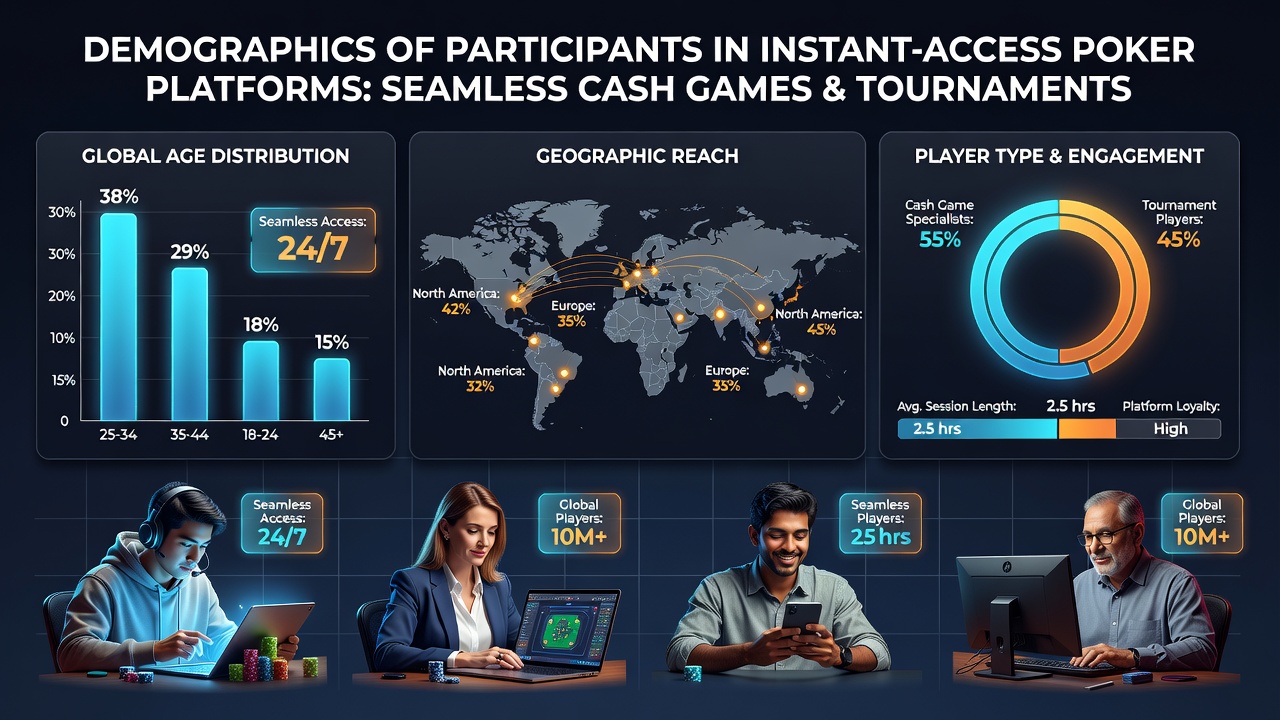
Urban areas register higher density of active accounts compared with rural zones, a pattern researchers link to consistent high-speed connectivity that supports uninterrupted transitions, and this divide appears consistent across North American and select Asia-Pacific datasets. Time-zone activity peaks during evening hours in major markets, reflecting how players integrate short poker sessions into daily routines without the friction of traditional logins.
Gender and Income Indicators
Gender breakdowns from available platform reports show male participants comprising roughly 70 to 75 percent of the user base, though female engagement has increased modestly in markets where promotional structures highlight low-barrier entry, and analysts tracking these shifts reference data from Australian regulatory summaries released in early summer 2026. Income indicators suggest middle to upper-middle brackets predominate, with users often citing disposable entertainment budgets that accommodate both cash game variance and tournament buy-ins in the same sitting.
Payment method preferences further illuminate demographic contours, as crypto and e-wallet options see elevated adoption among tech-savvy cohorts who prioritize speed, while traditional card funding remains common among slightly older segments. These patterns emerge from cross-platform comparisons that avoid single-jurisdiction bias and instead draw on aggregated findings from multiple regulatory and academic sources.
Behavioral Patterns in Format Switching
Participants who utilize seamless cash-to-tournament pathways often exhibit session lengths that exceed those recorded on standard registered sites, and evidence from university-linked gaming studies shows this stems from reduced setup time rather than any inherent preference shift. Multi-format users tend to allocate bankrolls across both styles within the same funding cycle, creating observable rhythms where cash game profits fund tournament entries or vice versa depending on recent results.
Retention metrics through June 2026 reveal that players engaging in at least one format switch per week maintain higher activity levels over six-month periods, a trend noted by trade groups monitoring digital poker adoption across varied regulatory landscapes. Such behaviors underscore how the absence of account barriers shapes not only who joins but how they structure their participation over time.
Conclusion
Demographic profiles on instant-access poker platforms continue to evolve as seamless cash game and tournament options expand, with data through mid-2026 providing clearer snapshots of age, location, gender, and behavioral distributions. Observers tracking these environments note that the combination of rapid funding and fluid format access draws a distinct cohort compared with traditional models, and ongoing reports from diverse regulatory and research bodies will likely refine these understandings further as adoption spreads.