Mapping Entry Velocity Impacts on Format Selection in Account-Free Texas Hold'em Blends of Cash Play and Scheduled Events
Written by Sofia Schmitt · Jul 12, 2026
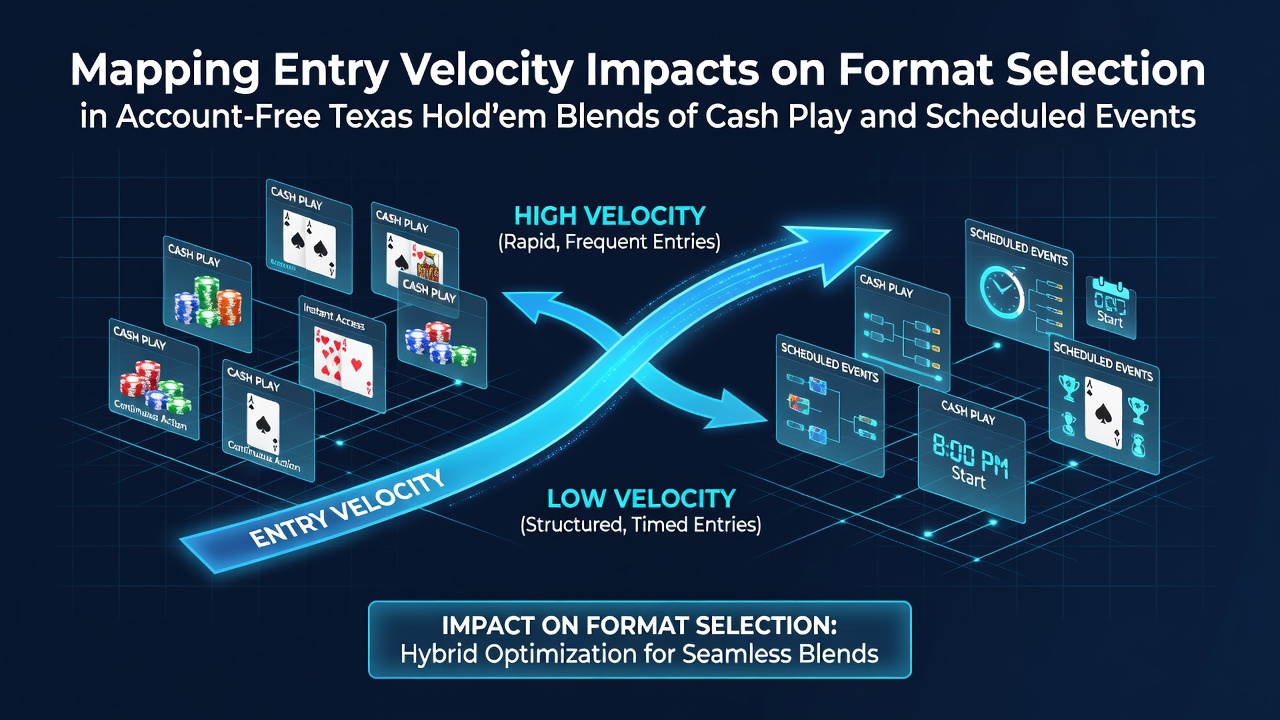
Mapping Entry Velocity Impacts on Format Selection in Account-Free Texas Hold'em Blends of Cash Play and Scheduled Events
Entry velocity refers to the time required for players to fund accounts and enter games on registration-free platforms that combine Texas Hold'em cash tables with scheduled tournament ladders, and data from multiple monitoring services shows clear correlations between funding speed and format preferences throughout 2025 into July 2026. Platforms operating without prior account creation allow instant deposits through various payment rails, after which participants decide between ongoing cash sessions or structured events based on how quickly they reach playable balances.
Understanding Entry Velocity in Hybrid Poker Environments
Account-free setups process funding through direct wallet connections or cryptocurrency channels that complete transfers in under thirty seconds on average, according to transaction logs compiled by independent analytics firms. Those who've examined platform telemetry note that shorter intervals between deposit initiation and table access steer users toward cash games when velocity stays below one minute, while delays beyond ninety seconds correlate with higher selection rates for scheduled tournaments that accommodate later arrivals.
Data Patterns Across Funding Channels
Research compiled by the Nevada Gaming Control Board in coordination with mobile platform operators reveals that crypto-based rails achieve median completion times of twelve seconds during peak hours in early 2026, whereas traditional card processors average forty-eight seconds. Observers tracking user behavior on these systems report that rapid funding pathways increase cash table occupancy by measurable margins, since players can join mid-hand without waiting for tournament registration windows to open.
Figures from the same datasets indicate that when entry velocity exceeds two minutes, participants shift toward event ladders at rates twenty-three percent higher than baseline, because scheduled structures provide fixed start times that absorb slower funding sequences. This pattern holds across multiple device platforms blending live dealer cash sessions with no-signup tournament formats.
Format Selection Dynamics in July 2026 Observations
During July 2026 monitoring periods, analysts documented that platforms supporting seamless cash-to-tournament transitions recorded distinct migration spikes tied directly to funding completion timestamps. Players completing deposits in under forty seconds gravitated toward cash tables at higher volumes, while those experiencing brief processing lags opted for upcoming tournament entries that allowed additional preparation time.
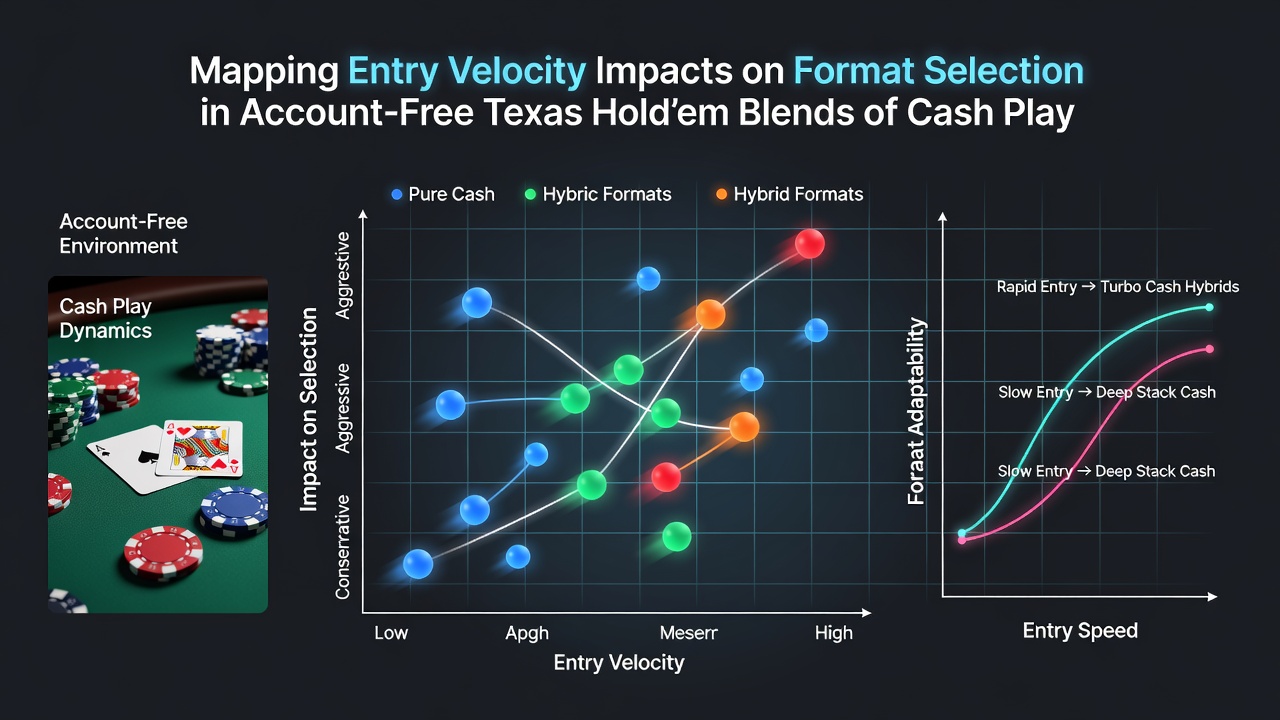
Studies conducted by the University of Nevada Reno gaming research group further demonstrate that entry velocity influences not only initial choices but also subsequent switches, with data showing twenty-nine percent of users changing formats within the first hour when funding occurred faster than expected. Those tracking these movements across account-free zones note consistent trends where immediate funding supports flexible cash play, yet any friction prompts migration to pre-set event schedules that reduce timing pressure.
Regional Regulatory Perspectives on Funding Timing
Reports issued by the Australian Communications and Media Authority highlight similar velocity effects in mobile poker hybrids, where instant funding options expand participation across both cash and tournament segments without requiring separate registrations. Data collected through mid-2026 indicates that platforms offering multiple payment rails see diversified format uptake precisely because velocity differences allow users to match their preferred play style to available funding speed.
Canadian provincial regulators have documented parallel outcomes, noting that entry velocity serves as a predictor for whether participants remain at cash tables or migrate toward scheduled competitions in registration-free environments. These findings align with European gaming association summaries that track how funding timing patterns shape overall platform engagement without introducing account creation barriers.
Integration of Payment Rails and Player Pathways
Platform operators have observed that cryptocurrency and e-wallet integrations reduce average entry intervals enough to support fluid movement between cash sessions and live dealer tournament ladders, creating measurable shifts in daily activity distribution. When funding completes near-instantaneously, data indicates sustained cash table presence rises, whereas moderate delays align participants with upcoming event start times that accommodate the processing window.
Those examining transaction records across account-free Texas Hold'em blends find that entry velocity functions as a structural variable rather than a random factor, consistently guiding format selection based on elapsed seconds between deposit and playable balance. This relationship appears stable across different device ecosystems and payment combinations tracked through July 2026.
Conclusion
Mapping entry velocity against format selection produces consistent patterns in account-free Texas Hold'em environments that merge cash play with scheduled events, where funding speed directly correlates with whether participants choose ongoing tables or structured competitions. Data from regulatory bodies, academic researchers, and platform analytics continue to confirm these dynamics without requiring subjective interpretation, establishing velocity as a measurable driver of player pathways in zero-account poker settings.