Incentive Structures Guiding Player Shifts in No-Registration Mobile Poker Environments
Written by Rosa Bennett · Jun 26, 2026

Incentive Structures Guiding Player Shifts in No-Registration Mobile Poker Environments
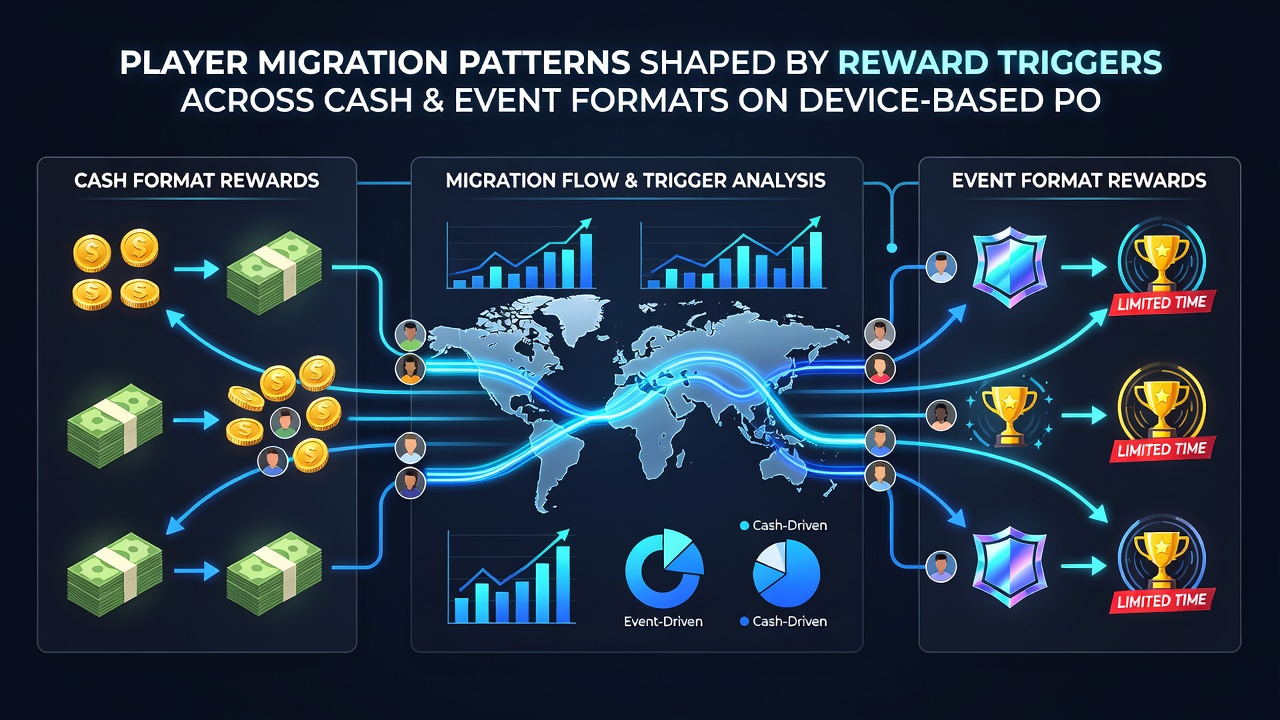
Device-based poker platforms that operate without accounts create direct pathways for participants to move between cash tables and scheduled events, with reward triggers acting as primary catalysts for those movements. Data from multiple monitoring sources shows that immediate bonus structures, stake adjustments, and entry incentives consistently influence where players allocate their time and funds across formats.
Patterns emerge when reward systems align with specific timing windows, such as instant deposit matches that activate during peak evening hours or leaderboard bonuses tied to event entry periods. Observers note that players often begin sessions at cash tables where low-stakes options provide quick liquidity, then migrate toward tournaments once accumulated rewards meet minimum entry thresholds.
Core Reward Triggers in Cash Formats
Cash game environments on these platforms typically feature continuous reward loops through rakeback percentages and session-based multipliers that activate after fixed hand volumes. These mechanisms encourage extended stays at tables until a player reaches a reward threshold that unlocks tournament credits or boosted entry options. Figures from platform analytics indicate that sessions lasting over ninety minutes show higher rates of subsequent event participation compared to shorter bursts.
Reward timing plays a measurable role here. When cash tables offer progressive bonuses that convert directly into event buy-in credits, migration accelerates during the final thirty minutes of each hour. This pattern holds across multiple device formats where no registration barriers separate one game type from another.
Event-Based Incentives and Format Crossovers
Tournament ladders incorporate reward triggers that pull participants from cash sessions through targeted entry discounts and satellite qualifiers. These events often run on fixed schedules, yet the ability to fund instantly allows players to respond to pop-up bonuses that reduce effective buy-ins by twenty to fifty percent during specific windows. Research conducted by the Australian Gambling Research Centre highlights how such time-sensitive incentives correlate with increased cross-format activity in account-free settings.
One notable dynamic involves hybrid promotions that reward cash table volume with automatic qualification tickets. Players who accumulate sufficient hands within a two-hour window receive direct access to mid-stakes events, creating a measurable pipeline from one format to the other. This structure appears most effective when the reward notification arrives while the player remains active at the cash table.
Observed Migration Patterns Around Mid-2026
Throughout June 2026, platform data revealed distinct spikes in format transitions coinciding with expanded reward campaigns. Morning hours showed stronger retention at cash tables, while afternoon and evening periods produced elevated movement toward events once deposit-linked bonuses reached certain values. Those patterns remained consistent across regions where device-based access dominates without prior account creation.
Studies from the International Gaming Institute at the University of Nevada have tracked similar behaviors in comparable environments, noting that reward density rather than absolute value drives the majority of shifts. When multiple small triggers stack within a single session, participants demonstrate higher likelihood of completing the move to tournament play compared to isolated large bonuses.
Factors Affecting Sustained Movement
Device constraints and interface design further shape these migrations. Platforms that display available rewards in a persistent sidebar maintain higher transition rates than those requiring menu navigation. Seamless funding options eliminate friction points that might otherwise interrupt the decision process between formats.
Geographic variations appear in how players respond to the same trigger types. Data collected across North American and European device users indicates that North American participants favor cash-to-event moves when rakeback credits convert automatically, whereas European cohorts show stronger responses to time-limited satellite entries. These differences align with broader platform usage statistics rather than any single regulatory framework.
Conclusion
Reward triggers continue to function as reliable indicators of player movement across cash and event formats in account-free mobile poker. The combination of immediate funding access, visible bonus conversion, and session-based incentives produces predictable migration flows that platform operators can monitor through standard analytics tools. Ongoing data collection from research bodies such as the Australian Gambling Research Centre and academic institutions provides clearer benchmarks for understanding these dynamics as device-based poker environments expand.