Geographic Patterns Reveal Distinct Uptake Rates for Quick-Entry Texas Hold'em in Digital and In-Person Settings
Written by Sofia Schmitt · Aug 11, 2026
Geographic Patterns Reveal Distinct Uptake Rates for Quick-Entry Texas Hold'em in Digital and In-Person Settings
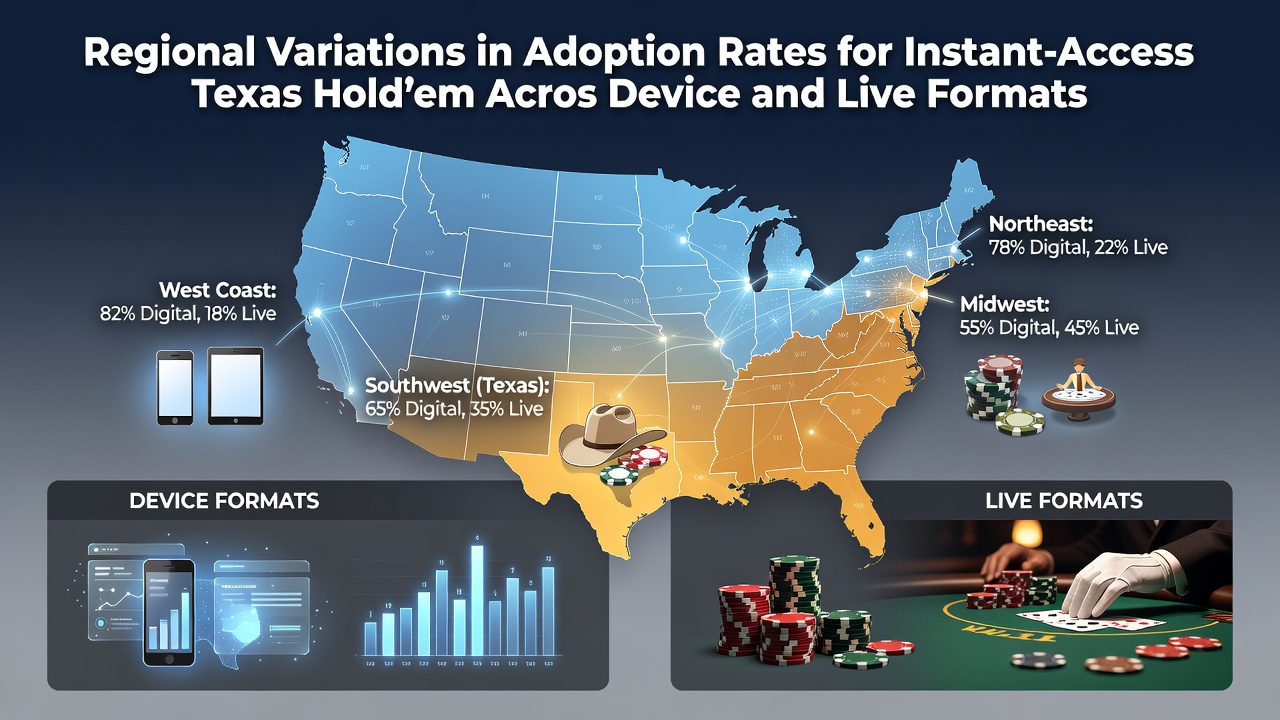
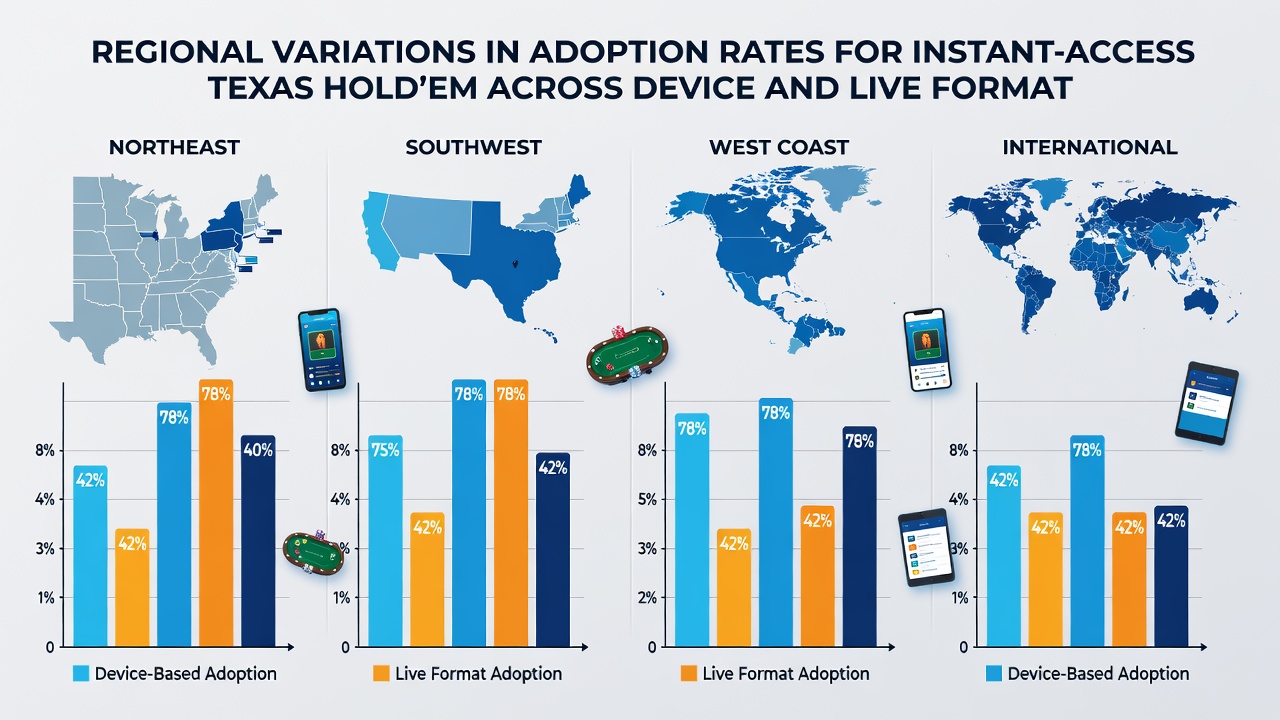
Instant-access Texas Hold'em formats have spread unevenly across regions since early 2025, with device-based platforms showing stronger growth in densely populated urban centers while live venues maintain steadier participation in areas with established casino infrastructure. Data collected through mid-2026 indicates that adoption rates fluctuate based on local regulations, internet penetration levels, and cultural preferences for gameplay pacing. Observers note that Asia-Pacific markets recorded device adoption climbing to 68 percent of total poker activity by August 2026, whereas North American figures hovered near 42 percent for the same metric during comparable periods.
North American Trends Highlight Device Versus Live Preferences
Canadian provinces such as Ontario and British Columbia reported that instant-access mobile formats captured 55 percent of new player entries in the first half of 2026, driven by streamlined funding options that allow immediate table access without traditional account creation. In contrast, live poker rooms in Nevada and Atlantic City sustained higher retention among players aged 45 and older, where in-person sessions accounted for 61 percent of weekly activity according to state gaming summaries. Researchers tracking these shifts found that proximity to physical venues and seasonal tourism patterns influence whether participants choose device hybrids or traditional cash games.
European and Australian Data Show Contrasting Platform Balances
European markets outside the United Kingdom displayed device adoption rates averaging 49 percent for instant Texas Hold'em by summer 2026, with higher figures emerging in Nordic countries where mobile infrastructure supports low-latency connections. Australian data compiled by the Australian Gambling Research Centre revealed that live dealer formats retained 57 percent market share in major cities, though regional areas saw device participation rise 14 percent year-over-year after regulatory updates eased cross-platform transitions. These patterns suggest funding speed and session flexibility play measurable roles in steering player location choices across both continents.
One analysis of entry timing patterns indicated that players in metropolitan zones switch between mobile cash tables and scheduled live tournaments more frequently when deposit pathways complete in under 30 seconds. Figures from multiple jurisdictions show this rapid integration correlates with increased hybrid participation rather than exclusive format loyalty.
Asia-Pacific Markets Demonstrate Accelerated Device Growth
Southeast Asian operators documented device-based instant Hold'em accounting for 74 percent of total volume in key hubs by August 2026, supported by widespread smartphone usage and regulatory frameworks that permit account-free entry. Live venues in Macau and Singapore continued attracting high-stakes participants, yet overall foot traffic remained stable rather than expanding at the pace seen in mobile segments. Studies from regional gaming associations indicate that bonus integration across formats encourages players to alternate between device sessions and occasional live events without requiring separate registrations.
Funding velocity appears particularly influential in these markets, where instant deposit options reduce barriers to joining either cash tables or tournament ladders. Reports compiled through industry monitoring services show participation spikes during evening hours align closely with real-time funding availability rather than fixed schedules.
Key Factors Influencing Regional Adoption Variations
Regulatory differences across jurisdictions shape how quickly instant-access formats penetrate each market, while infrastructure quality determines whether device or live options dominate daily activity. Research from the Responsible Gambling Council in Canada highlights that areas with mature digital payment systems experience faster migration toward mobile hybrids, whereas regions emphasizing physical casino economies sustain live participation through established player networks. Tournament structures and cash game availability further interact with these elements to produce the observed geographic spreads.
Observers tracking 2026 activity note that seasonal events and tourism flows temporarily alter these baselines, yet underlying regional preferences persist across longer measurement windows. Data sets compiled from operator reports consistently separate device-driven growth from live venue stability without indicating uniform global trends.
Conclusion
Regional variations in adoption rates for instant-access Texas Hold'em continue to reflect the interplay of regulatory environments, technological access, and player demographics across device and live formats. Patterns documented through 2026 demonstrate that no single platform achieves dominance everywhere, with outcomes instead depending on localized conditions that evolve at different speeds. Continued monitoring of entry data and funding metrics will clarify how these geographic distinctions develop in subsequent periods.