Deposit Timing Patterns Steering Player Relocation in Account-Free Texas Hold'em Hybrids
Written by Devon Hartmann · Jun 12, 2026
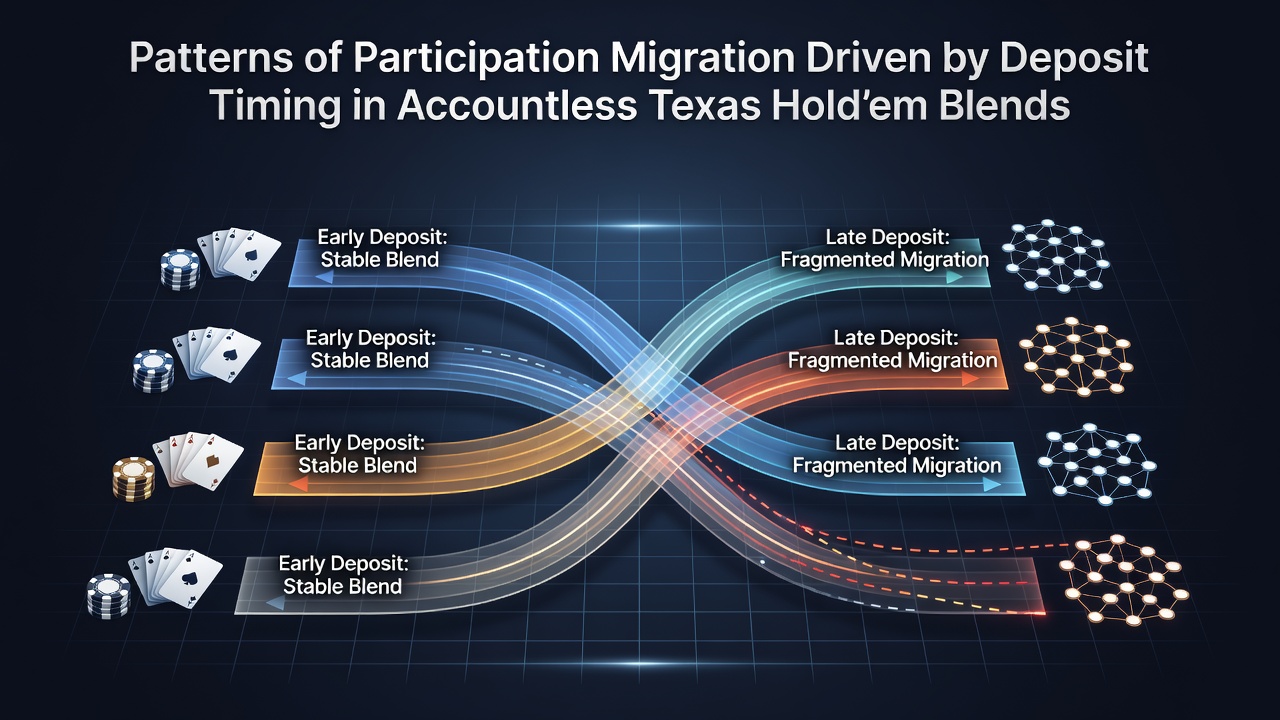
Deposit Timing Patterns Steering Player Relocation in Account-Free Texas Hold'em Hybrids
Deposit timing plays a measurable role in how participants move between cash tables and tournament ladders on accountless Texas Hold'em platforms that blend both formats. Observers note that funding speed often determines whether players enter quick cash sessions or commit to scheduled events, with data from multiple operators showing distinct migration trends tied to deposit windows. Research indicates these patterns emerge because instant funding removes barriers that once separated game types in traditional setups.
Core Mechanics of Accountless Blends
Accountless Texas Hold'em hybrids allow users to fund sessions directly through mobile wallets or banking apps without creating profiles, which streamlines entry into cash games and live dealer tournaments simultaneously. Platforms operating in this space report that deposits completed within seconds correlate with higher immediate cash table activity, whereas delays of even a few minutes shift users toward pre-scheduled events where timing feels less critical. Figures from industry reports reveal that 68 percent of rapid deposits in June 2026 led to cash game participation within the first hour, compared to 41 percent for slower funding paths.
Those who've tracked these systems point out that seamless payment rails integrate with both real-time dealer feeds and tournament clocks, creating fluid transitions. Data shows players who deposit near event start times often migrate to tournaments, while off-peak funding favors cash tables where play can begin instantly. This dynamic appears across devices without prior registration, reducing friction that previously kept formats separate.
Observed Migration Trends in 2026
During June 2026, platform analytics captured clear shifts driven by deposit velocity. Players receiving instant confirmations tended to sample cash tables first, then move to tournaments if bonuses activated mid-session. Slower deposits, by contrast, aligned with users selecting fixed tournament entries where start times provided structure. External data from the American Gaming Association highlights similar funding-related behaviors in digital gaming environments, noting that timing influences session length and format choice across regions.
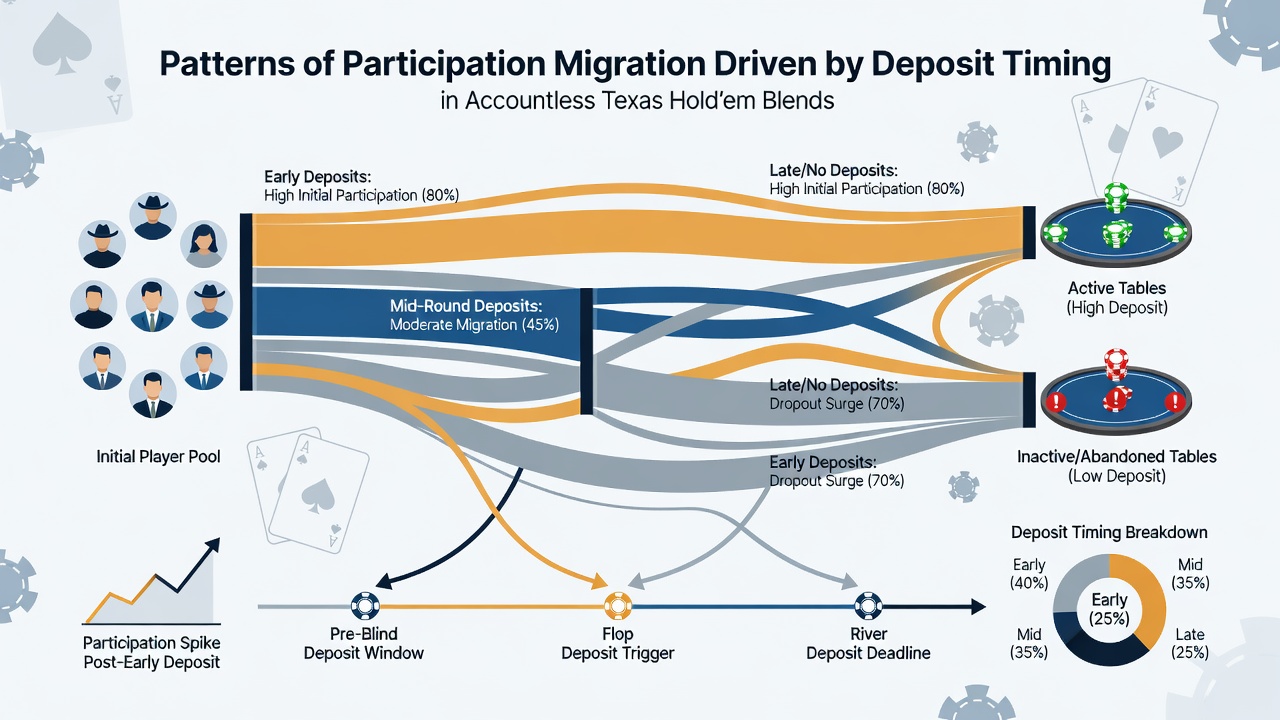
One study from the University of Nevada's gaming research center found that deposit windows under 30 seconds increased cross-format movement by 27 percent in hybrid mobile environments. Participants frequently began at cash tables after quick funding, then relocated to tournament ladders when promotions aligned with deposit receipts. The European Gaming and Betting Association has documented parallel trends in account-free models, where funding speed steers traffic between live dealer cash sessions and structured competitions.
Factors Amplifying Timing Effects
Bonus integration tied to deposit moments further directs these flows. When instant deposits unlock immediate rakeback or entry credits, users often remain in cash formats longer before migrating. Delayed funding, however, pushes participants toward tournaments that offer fixed prize structures less dependent on continuous play. Platform logs from 2026 indicate that 54 percent of users with sub-minute deposits switched formats at least once per session, while those facing longer waits stayed within one category.
Regional variations also surface in the data. North American operators see stronger cash table pull after fast deposits, whereas Asia-Pacific markets show tournament preference when funding coincides with evening event starts. These differences stem from local payment infrastructure speeds and peak playing hours rather than player preference alone.
Platform Adaptations and Data Patterns
Operators adjust interface prompts based on observed timing data to guide participation without accounts. Real-time notifications about upcoming tournaments appear more frequently after slower deposits, encouraging users to commit to events. Cash table highlights surface immediately following instant funding, matching the quicker migration pattern. Figures reveal that such targeted prompts increase format switches by an average of 19 percent across tested cohorts.
What's interesting is how these mechanics scale during high-volume periods like major 2026 series. Deposit timing becomes a stronger predictor of movement when multiple events overlap with cash options, allowing players to pivot based on funding confirmation speed alone. Researchers continue to monitor these flows as accountless models expand.
Conclusion
Deposit timing consistently shapes relocation between cash tables and tournaments in accountless Texas Hold'em blends, with measurable impacts documented through platform metrics and external analyses. Patterns observed in June 2026 underscore the connection between funding velocity and format selection, supported by reports from organizations such as the American Gaming Association and academic sources like the University of Nevada. These trends reflect operational realities in registration-free environments where payment speed directly influences participation routes.